
No-Internet Group
Description
Simple minimalistic methodology to prevent specified Linux programs having access to the public Internet via iptables
Workflow
System applies no-internet iptables rule at boot
        ↓
User executes program
        ↓
Program is launched via sg with the group "no-internet"
        ↓
Newly created process inherits no-internet GID
        ↓
iptables matches packets from processes with the no-internet GID
        ↓
Outbound packets belonging to the program dropped
Getting Started
Dependencies
-
iptables
-
systemd or cron
-
sg
Creating the Group
First we will create the controlled access group through which programs will be denied public network access
groupadd no-internet
And add your user to it
usermod -a -G no-internet youruser
You should now see no-internet as a group your user is a member of
To check run
groups youruser
Your user will need to be a member of the group as we will run the programs through sg
Creating the Systemd Service
Next we will create a systemd service which uses iptables to drop outbound connections made by the "no-internet" group
touch /etc/systemd/system/no-internet.service
nano /etc/systemd/system/no-internet.service
Enter the following within the service file then write and quit
[Unit]
Description=Drops outbound Internet traffic for the group "no-internet"

[Service]
ExecStart=iptables -I OUTPUT -m owner --gid-owner "no-internet" -j DROP

[Install]
WantedBy=multi-user.target
Breakdown of iptables command:
-
iptables is an administration tool for IPv4/IPv6 packet filtering
-
the -I OUTPUT flag specifies the rule is responsible for packets leaving the host
-
the -m owner flag allows packet filtering based upon the owner of the process
-
the --gid-owner "no-internet" flag specifies for the rule to match processes created by the group 'no-internet'
-
the -j DROP flag specifies the action to take, in this case dropping the packets
Next we will reload our systemctl services, and enable no-internet so it persistently starts at boot
systemctl daemon-reload
systemctl enable no-internet.service
systemctl start no-internet.service
Note: a similar effect could be achieved via cron by making an entry along the lines of
@reboot root iptables -I OUTPUT 1 -m owner --gid-owner "no-internet" -j DROP
Modifying .desktop entries
.desktop files are used within graphical Linux shells to launch programs
Simply put when a program is ran through an application launcher the .desktop file is what is what is being read from and executed in the background
They are typically located within ~/.local/share/applications
An example of a program which I want to deny network access to due to its persistent and bothersome connections is Lutris
Before modification it's Exec value will likely look something like
Exec=/usr/bin/lutris
However we are going to modify this so it runs under the group "no-internet" any time it is launched, thereby having outbound connections dropped
This may be achieved by changing the line like so:
Exec=/usr/bin/sg no-internet -c /usr/bin/lutris
Note: your binaries may be located in a different place, type "which [program_name]" or "type [program_name]" into the terminal to find their path
Now any time lutris is launched from my desktop it will be ran through the "no-internet" group
Usage Examples
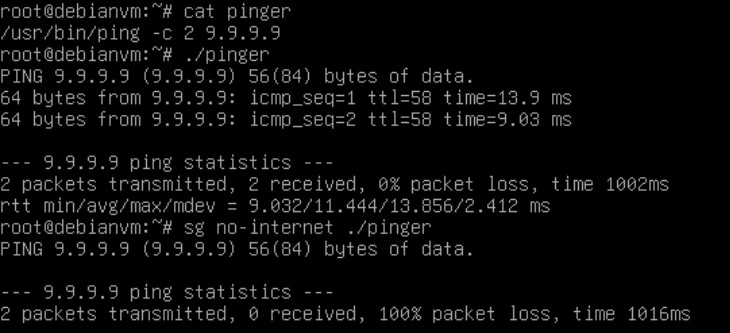
CLI example:
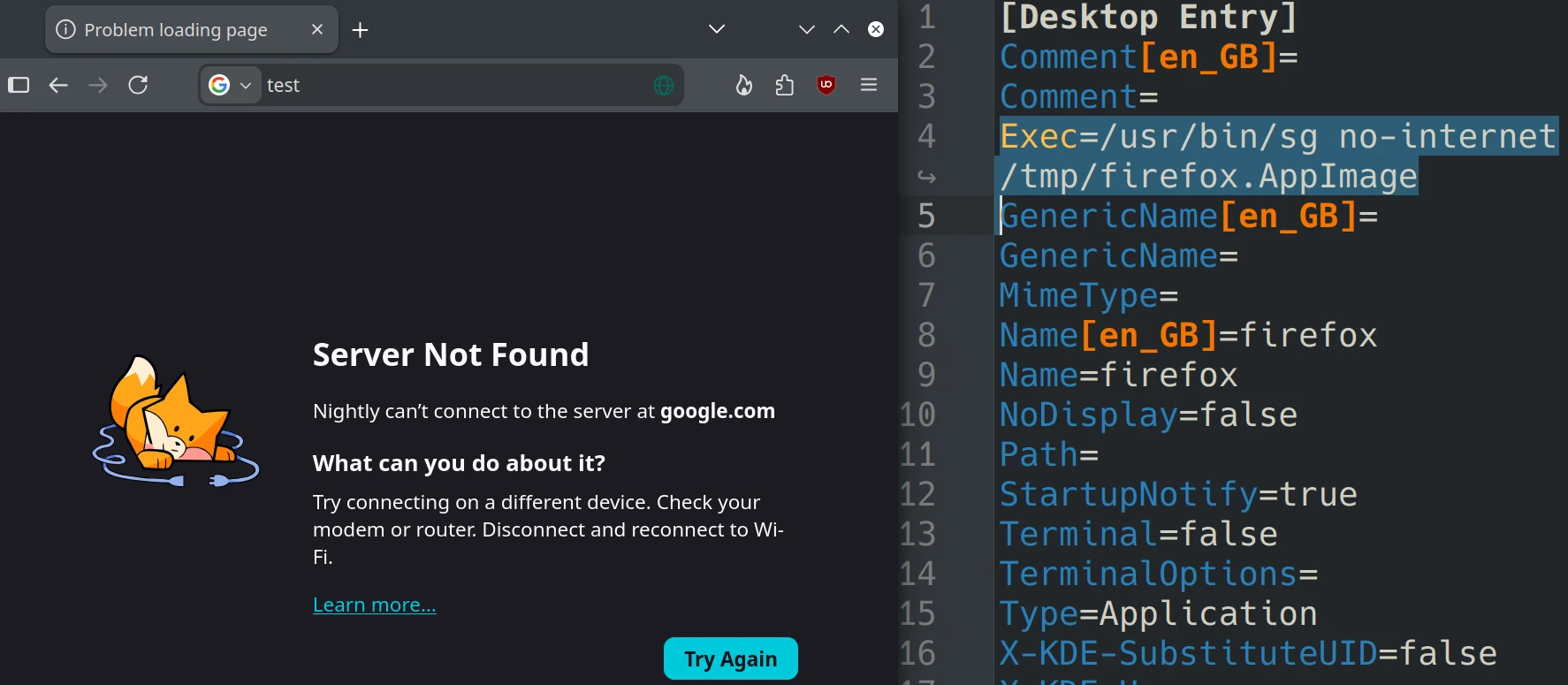
Desktop example:
Limitations
As iptables operates at layer 3 programs ran through this sandboxed group will still be able to reach devices within the same broadcast domain